How to Align Your Music Website with Your Artist Goals
How to Align Your Music Website with Your Artist Goals
The best artist websites combine strategy and design, with features that evolve as you grow.
As an artist, your website isn't just selling a product or presenting a static portfolio of your music. You're a creative who needs an adaptive site capable of evolving as your career evolves.
It goes without saying that certain website features are simply expected in today’s digital world. Mobile friendliness, high-quality images, ad-free design, navigational lay-outs are the baseline necessities for a functional and appealing site. However, to truly build an impactful music website, you need to go one step further:
aligning your website with your career goals as an artist.
By doing so, your website supports you and grows alongside your career, helping you address various priorities of music discovery, artist credibility, fan relationships, and revenue-earning.
Let's take a look at how this works.
Emerging Artists: Prioritizing Music Discovery, Promotion and Ease
If your goals are getting seen and making it cheap, music discovery should be a top priority.
Artists are often looking for solutions to increase streams, discoveries, reach, engagement, and so on. Your music is produced and released—now you need to capture interest.
One way to do so is with a website builder that has a music-forward design.
Think: a website that automatically integrates your music discography and showcases your albums, singles, and releases.
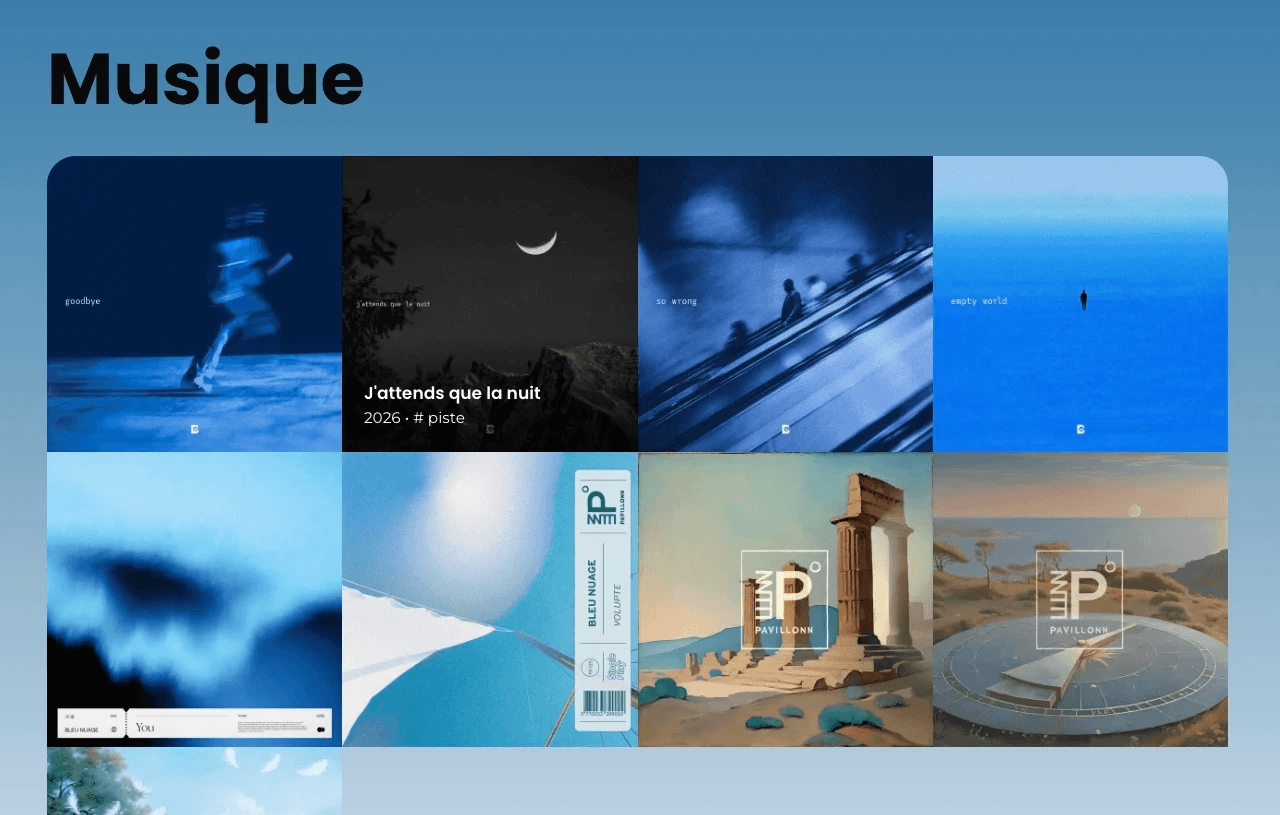
Having all your music fully integrated onto your site ensures your tracks are easily viewable and streamable by website visitors. Interested listeners who visit your site can immediately see your tracks and listen directly, without needing to redirect to your Spotify profile and choosing a track. Bleu Nuage's Winamp website does a great job at this.
The takeaway? Don’t settle for DSP links when you can put your music at the forefront of your site.
Make it easy.
Next, is simplicity.
Most emerging artists are still working full or part-time jobs as they grow. Because of this, creating a website with developer-worthy effects is not necessarily a priority at this stage in your career needs. It’ll take too much time, money, and stress to make it work well.
Instead, you need something easy, quick, and no-BS.
The best option in this case? A website builder with pre-made templates and simple-to-understand UI. This means no coding, no unintuitive designing, and no over-complications. Wix, Wordpress, and Winamp for Artists work well here as options.
Growing Musicians: Establishing Your Credibility and Fan Relationships
If you’re garnering streams and steadily growing, it’s time to prioritize your credibility. With thousands of artists releasing music every day, standing out isn't always easy. By building your credibility in the industry and nurturing the relationships you have with existing fans, you reinforce what's already working well for you.
In the case of credibility-building, your website should act as a digital business card that introduces your career, music, and artist story. Of course, while maintaining a strong visual and storytelling identity.
Think: a website with tour dates, social media links, clear contact forms, and strong visual identity (images, fonts, colors, so forth).
Managers, collaborators, and booking agents typically look for a professional, centralized place to learn about you and get in touch. Your website should combine key info from your social media and DSP bios to create a coherent narrative of who you are.
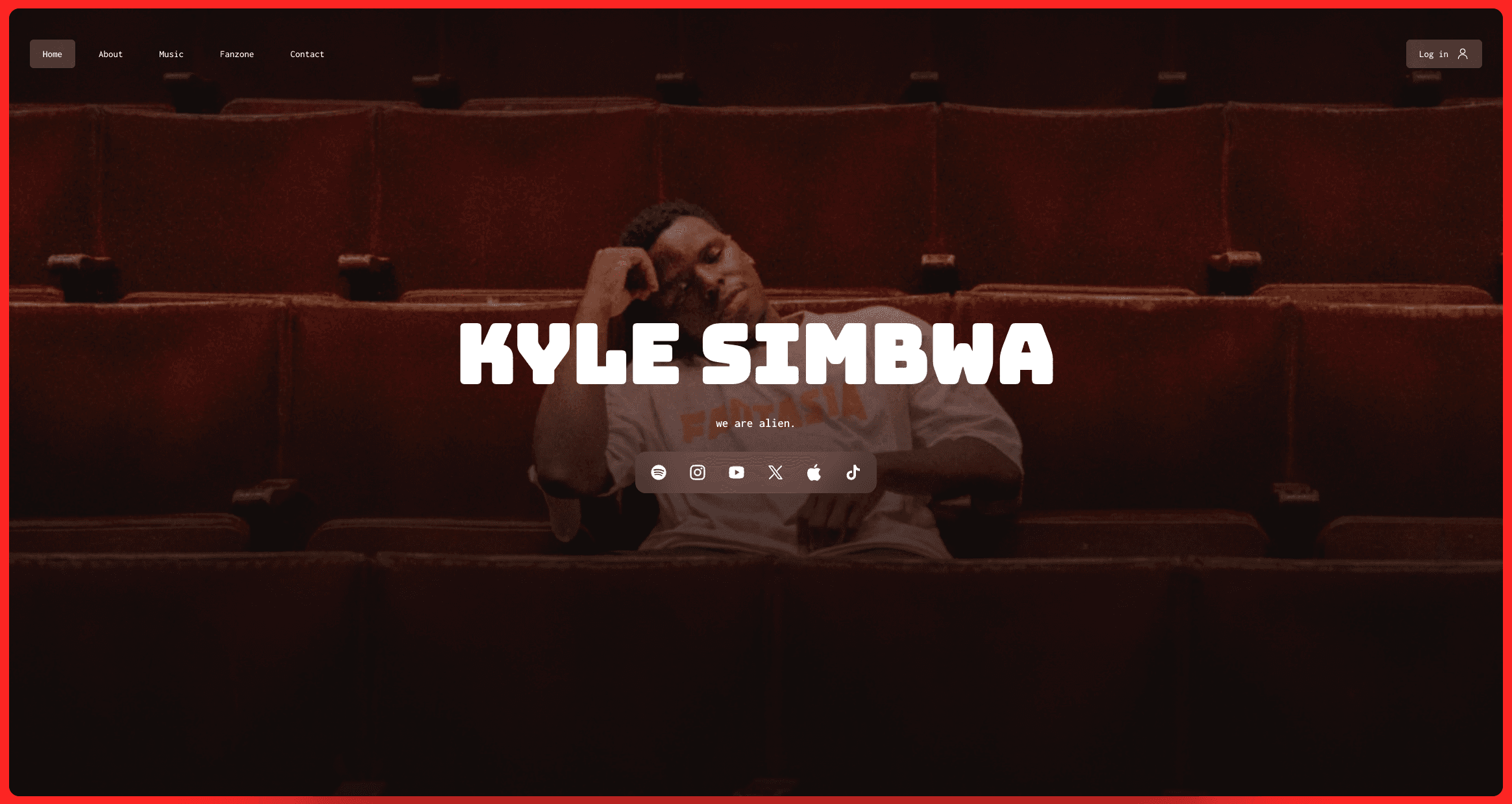
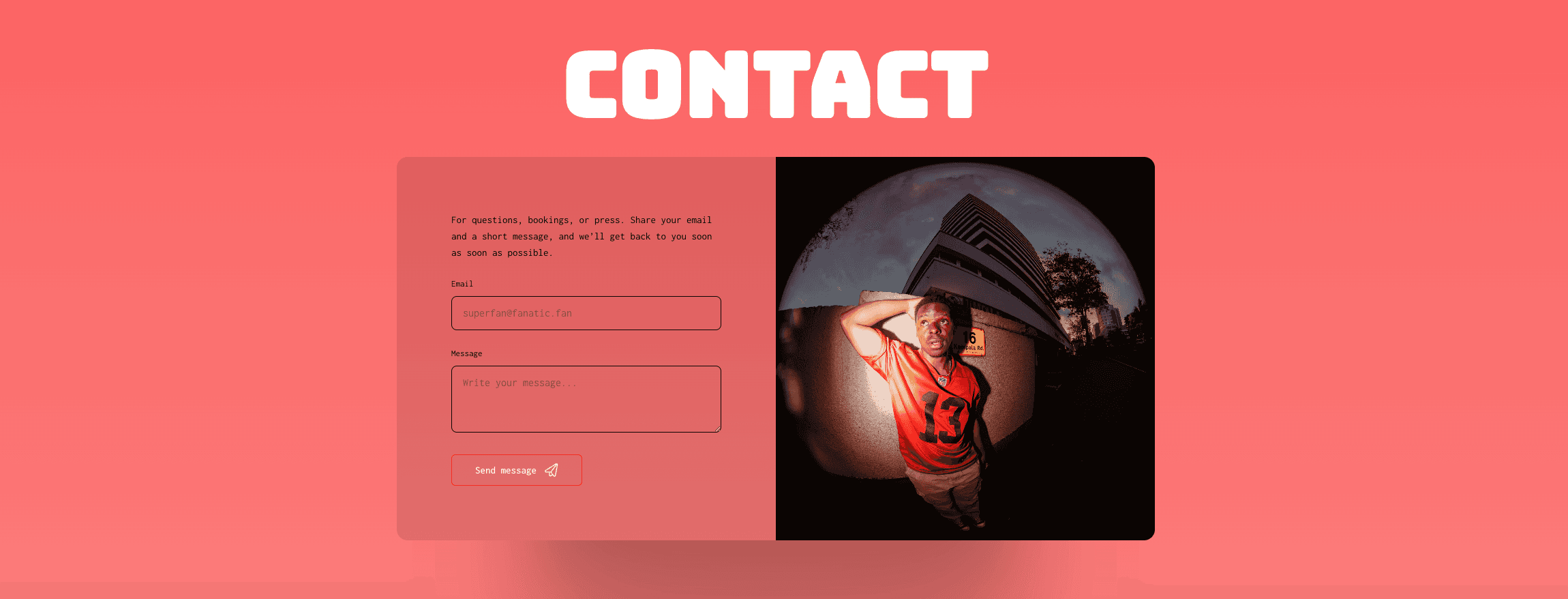
Artist Kyle Simbwa does a great job with his Winamp page. The design clearly conveys his unique artist identity whilst communicating key info about who he is and the music he creates.
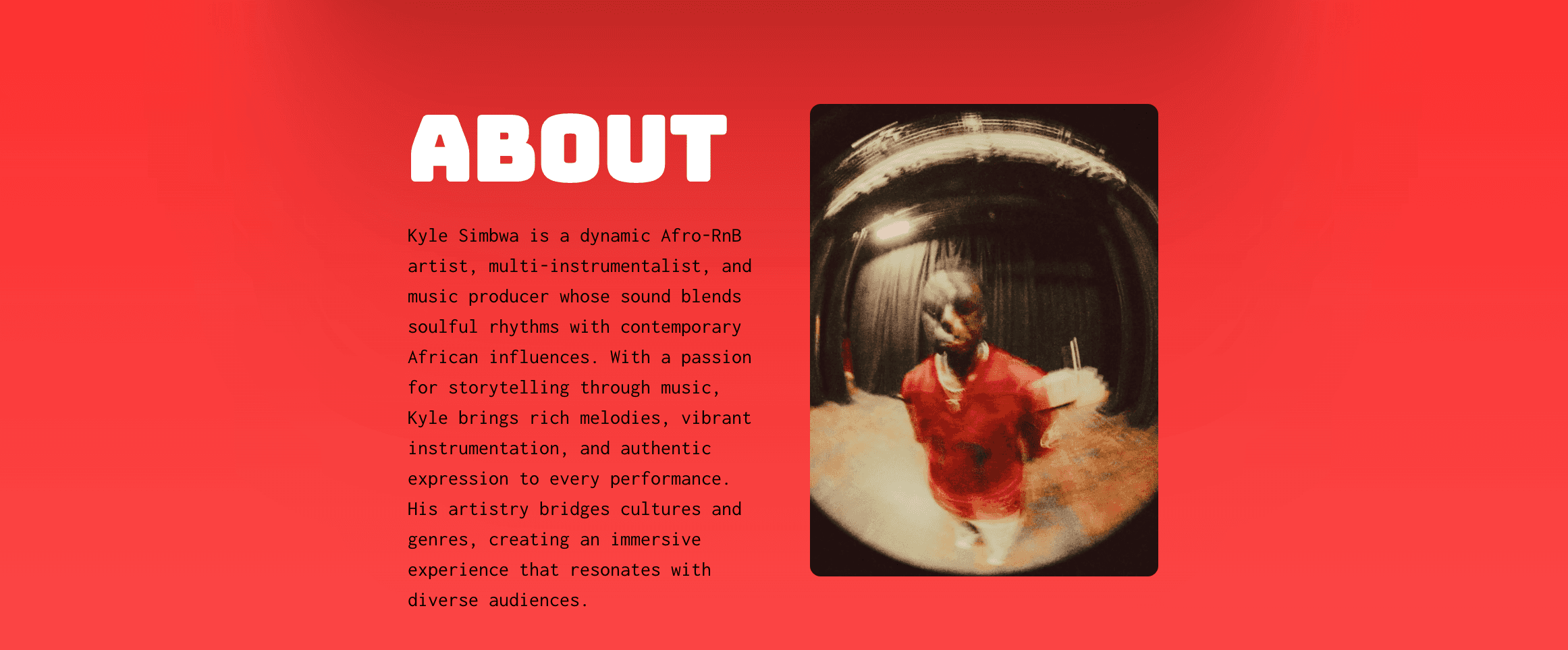
Additionally, his social links are clearly accessible, he has a detailed “About” section, and a clear contact form for interested parties. All in all, a credible place that centralizes his story and reinforces his career seriousness.
Building Fan Relationships
Besides credibility, your fan relationships are one of the main mechanisms that push artist growth.
Fans engage with your content (boosting algorithmic reach), buy your merch and concert tickets (repeatedly, we might add), and share your music with new listeners. Not paying attention to your fans is like not watering your plants and expecting them to survive.
Some artists might be surviving off of little to none fan relationship-building and seemingly doing just fine. But real exponential growth is waiting the minute fan relationships become a serious priority.
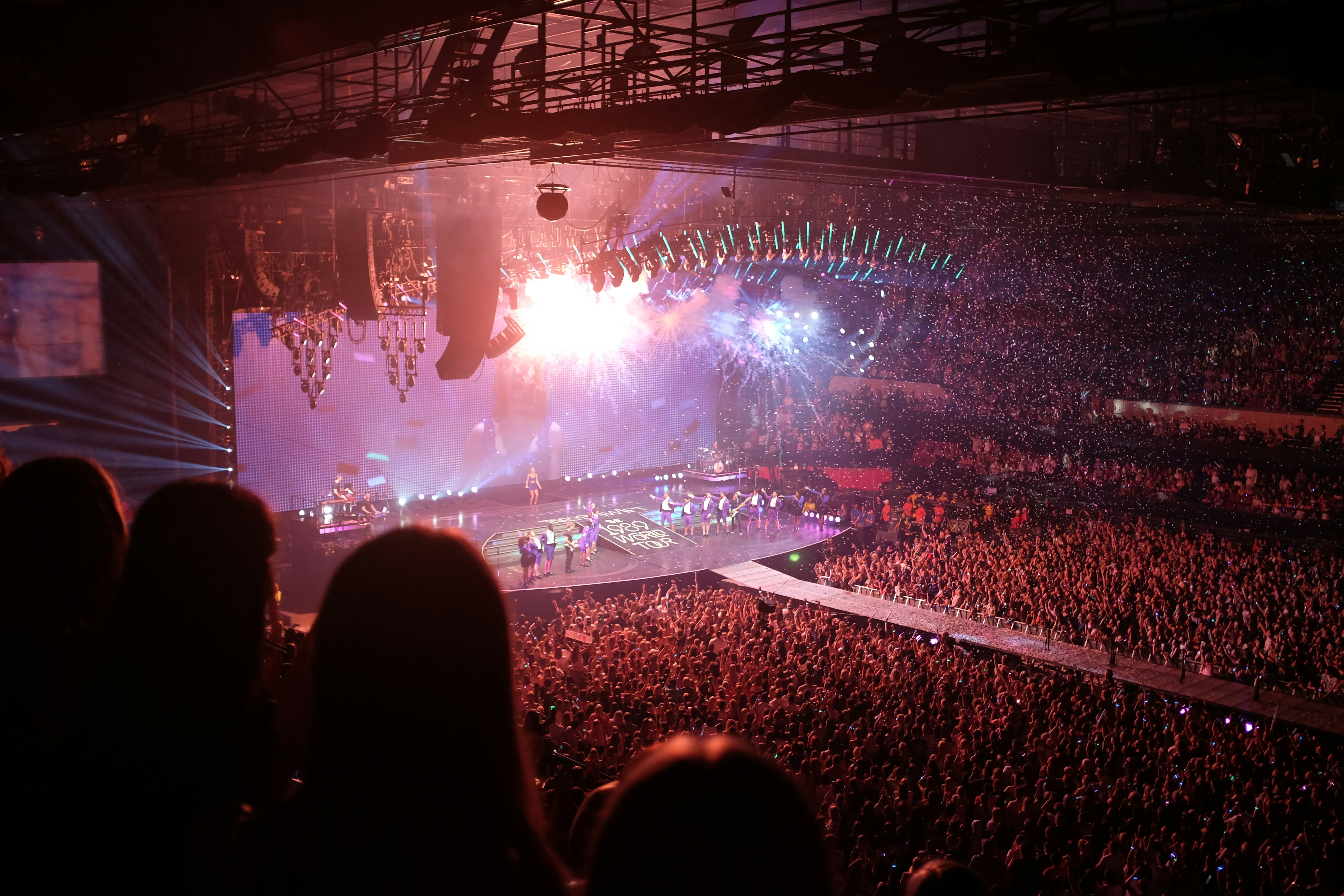
Imagine how much more difficult it would have been for Taylor Swift to become the best-selling female musician of the 21st century without her extremely loyal and dedicated fanbase. Not many other artists can sell concert tickets at a steep price point and still sell out shows around the world.
That's the power of fandom.
Therefore, if your goal is to build lasting fan relationships, your website should help you nurture visitors and convert listeners.
Think: CRM systems and exclusive membership communities.
By doing so, you will take advantage of the full potential of fan connection, helping set the groundwork for your future growth, success, and listener loyalty.
Remember: Website Features Can Support Multiple Goals
Most website features can support multiple goals at once. For example:
Newsletters can promote new releases and drive streams, while strengthen fan relationships.
CRM systems help organize fan communication, but they also improve professionalism when working with collaborators or booking agents.
Membership communities generate revenue, but they also deepen engagement with your most loyal listeners.
Your website should not lock you into a single strategy. Instead, it should give you the flexibility to experiment with different growth approaches as your career evolves.
Established Artists: Earning from Fans and Selling Shows
If you’ve built an audience, the question now becomes:
Are you earning from it?
For many artists, streaming revenue alone isn’t sustainable. Even with thousands of listeners, payouts remain small unless your catalog is generating large stream counts. At this stage, your website shouldn’t just showcase your music, it should generate income and convert fan attention into real support.
Think: merch shops, fan memberships, ticket integrations, and tipping.
Instead of sending fans across multiple platforms, a well-structured website lets you centralize revenue opportunities in one place.
Monetizing Your Fan Audience
One way to monetize your audience is through direct fan support.
Some artists accept donations or tips from fans who want to support their music. Others offer something in return, such as exclusive content or early access to releases.
This revenue strategy is known as content monetization and it has become increasingly popular with creators across industries. You’ve probably seen content monetization appear on popular mediums such as: YouTube Channel Memberships, Substack, or Patreon communities.
As an artist, these same revenue opportunities apply to you, too.
Your website can host a fan membership space where supporters gain access to content such as:
behind-the-scenes studio clips
early access to new releases
demo versions of songs
exclusive merch drops
pre-sale concert tickets
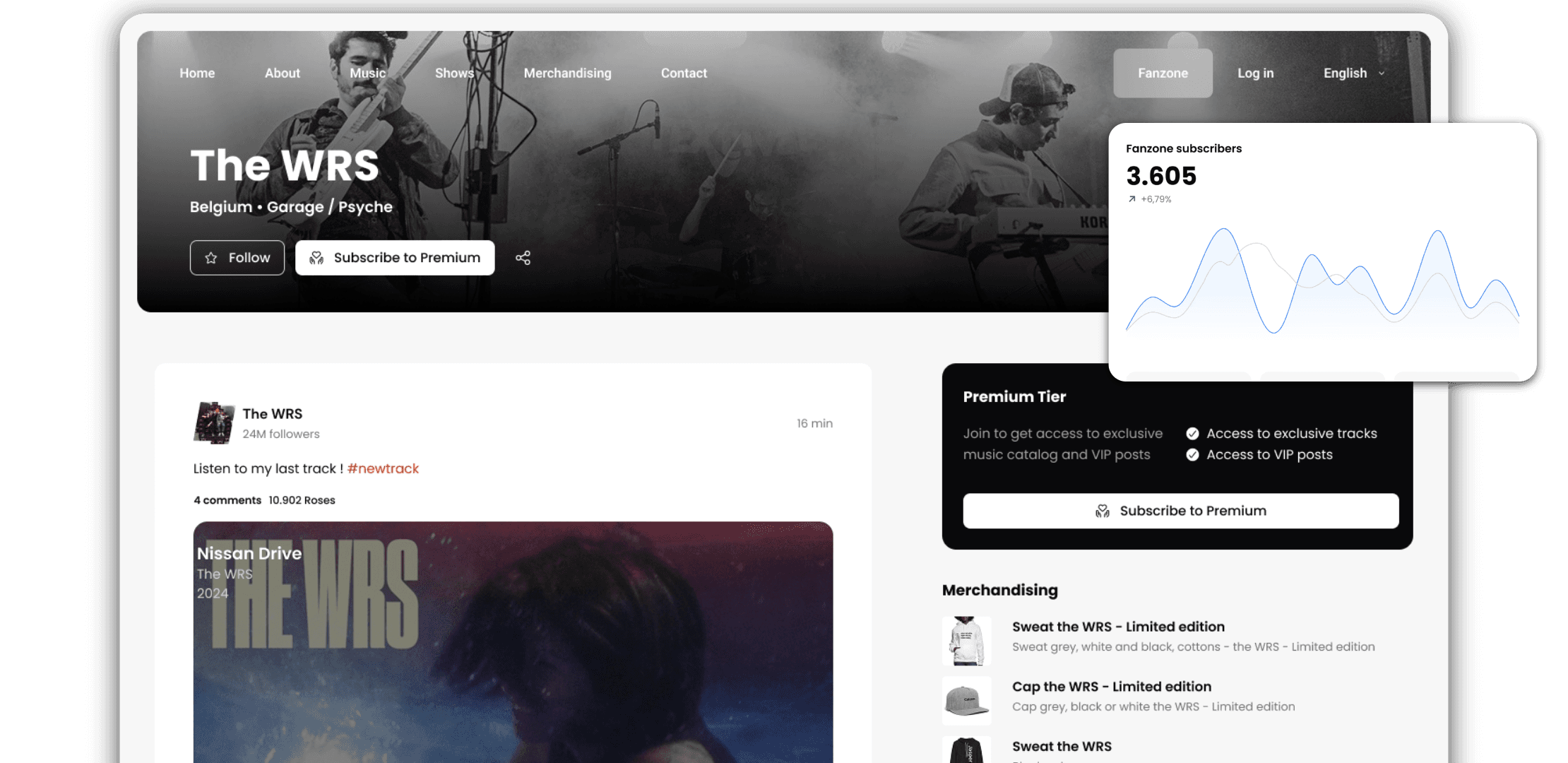
At Winamp, we made content monetization possible for artists with our Fanzone, which integrates directly into your website and with your music. Fans feel closer to your work, your music, and your growth, while you build a recurring revenue stream that doesn’t depend on algorithms. Win-win.
Check out The WRS's Fanzone below for some inspo.
Selling Concert Tickets and Merch
Another major role of an established artist website is converting fans into revenue via live shows and merch. Having upcoming concerts linked on your site is an easy way to communicate ticket availability and encourage purchases.
Think: Ticket integrations with platforms like Bandsintown, Songkick and Winamp for Artists for shows, and an integrated merch store.
Removing extra steps between expressed interest and actual purchase can significantly improve your conversion rates. Plus, selling merch on your website offers particularly large profit margins due to less middlemen and low(er) production costs.
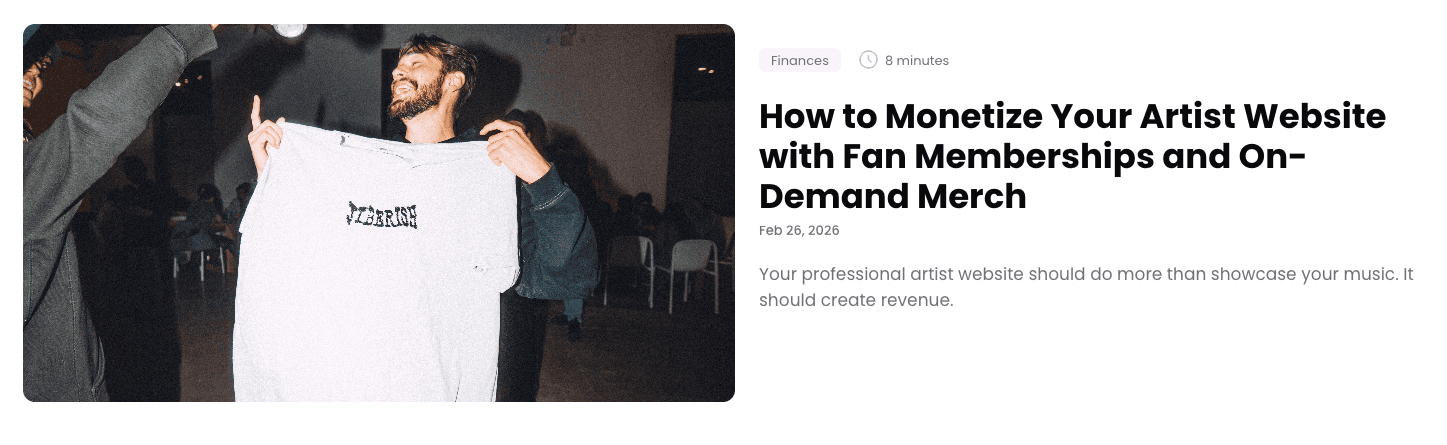
We wrote a whole blog article about how monetizing your artist website with fan memberships and on-demand merch is easier than ever and gives you greater control over your revenue. Check it out if you're interested.
Choose a Music Website That Grows With Your Artist Career
Before we wrap up, we want to mention one mistake we see many artists making. And that's choosing a website solution that works only for their current needs. This is super common for early, emerging artists.
At the beginning of your career, you might only need a place to showcase your music, a simple artist bio, or simple links to your DSPs. You're excited to promote your music, so you quickly make a simple website with little to no strategy behind the decision.
But as your audience grows, your needs for an artist website evolve quickly. You may eventually want to add features such as merchandising, fan membership communities, ticket links, CRM systems, and so on.
If your website builder of choice doesn’t support this growth, you’ll eventually need to rebuild or move your site, which can cost you time, money, and momentum. For this reason, it’s often better to choose a website builder that supports future expansion, even if you don’t use every feature right off the bat.
At the end of the day, your artist website should grow alongside your career and music strategy, helping you prioritize music discovery, artist credibility, and fan relationships, while earning you revenue along the way.
As an artist, your website isn't just selling a product or presenting a static portfolio of your music. You're a creative who needs an adaptive site capable of evolving as your career evolves.
It goes without saying that certain website features are simply expected in today’s digital world. Mobile friendliness, high-quality images, ad-free design, navigational lay-outs are the baseline necessities for a functional and appealing site. However, to truly build an impactful music website, you need to go one step further:
aligning your website with your career goals as an artist.
By doing so, your website supports you and grows alongside your career, helping you address various priorities of music discovery, artist credibility, fan relationships, and revenue-earning.
Let's take a look at how this works.
Emerging Artists: Prioritizing Music Discovery, Promotion and Ease
If your goals are getting seen and making it cheap, music discovery should be a top priority.
Artists are often looking for solutions to increase streams, discoveries, reach, engagement, and so on. Your music is produced and released—now you need to capture interest.
One way to do so is with a website builder that has a music-forward design.
Think: a website that automatically integrates your music discography and showcases your albums, singles, and releases.
Having all your music fully integrated onto your site ensures your tracks are easily viewable and streamable by website visitors. Interested listeners who visit your site can immediately see your tracks and listen directly, without needing to redirect to your Spotify profile and choosing a track. Bleu Nuage's Winamp website does a great job at this.
The takeaway? Don’t settle for DSP links when you can put your music at the forefront of your site.
Make it easy.
Next, is simplicity.
Most emerging artists are still working full or part-time jobs as they grow. Because of this, creating a website with developer-worthy effects is not necessarily a priority at this stage in your career needs. It’ll take too much time, money, and stress to make it work well.
Instead, you need something easy, quick, and no-BS.
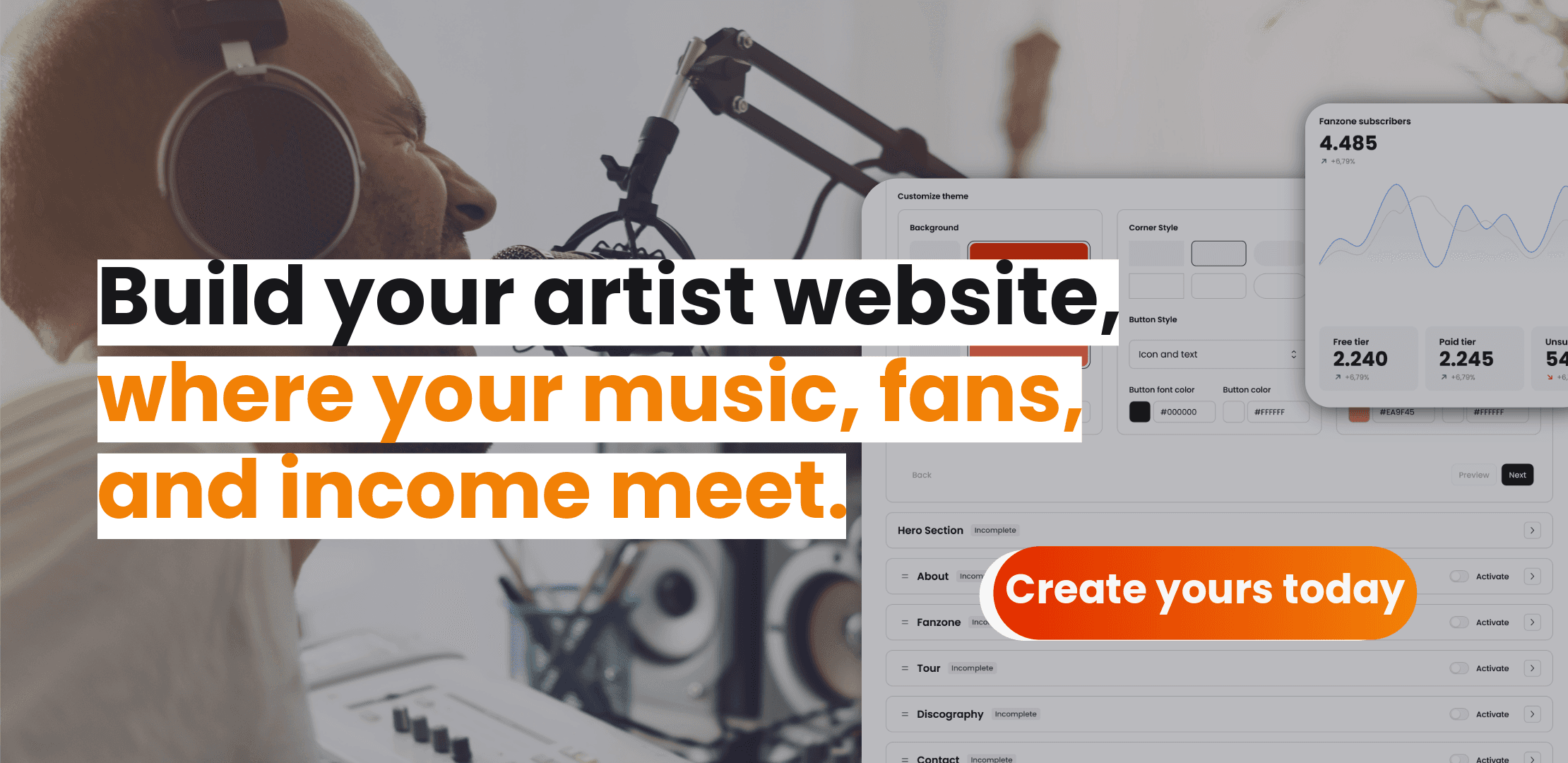
The best option in this case? A website builder with pre-made templates and simple-to-understand UI. This means no coding, no unintuitive designing, and no over-complications. Wix, Wordpress, and Winamp for Artists work well here as options.
Growing Musicians: Establishing Your Credibility and Fan Relationships
If you’re garnering streams and steadily growing, it’s time to prioritize your credibility. With thousands of artists releasing music every day, standing out isn't always easy. By building your credibility in the industry and nurturing the relationships you have with existing fans, you reinforce what's already working well for you.
In the case of credibility-building, your website should act as a digital business card that introduces your career, music, and artist story. Of course, while maintaining a strong visual and storytelling identity.
Think: a website with tour dates, social media links, clear contact forms, and strong visual identity (images, fonts, colors, so forth).
Managers, collaborators, and booking agents typically look for a professional, centralized place to learn about you and get in touch. Your website should combine key info from your social media and DSP bios to create a coherent narrative of who you are.
Artist Kyle Simbwa does a great job with his Winamp page. The design clearly conveys his unique artist identity whilst communicating key info about who he is and the music he creates.
Additionally, his social links are clearly accessible, he has a detailed “About” section, and a clear contact form for interested parties. All in all, a credible place that centralizes his story and reinforces his career seriousness.
Building Fan Relationships
Besides credibility, your fan relationships are one of the main mechanisms that push artist growth.
Fans engage with your content (boosting algorithmic reach), buy your merch and concert tickets (repeatedly, we might add), and share your music with new listeners. Not paying attention to your fans is like not watering your plants and expecting them to survive.
Some artists might be surviving off of little to none fan relationship-building and seemingly doing just fine. But real exponential growth is waiting the minute fan relationships become a serious priority.
Imagine how much more difficult it would have been for Taylor Swift to become the best-selling female musician of the 21st century without her extremely loyal and dedicated fanbase. Not many other artists can sell concert tickets at a steep price point and still sell out shows around the world.
That's the power of fandom.
Therefore, if your goal is to build lasting fan relationships, your website should help you nurture visitors and convert listeners.
Think: CRM systems and exclusive membership communities.
By doing so, you will take advantage of the full potential of fan connection, helping set the groundwork for your future growth, success, and listener loyalty.
Remember: Website Features Can Support Multiple Goals
Most website features can support multiple goals at once. For example:
Newsletters can promote new releases and drive streams, while strengthen fan relationships.
CRM systems help organize fan communication, but they also improve professionalism when working with collaborators or booking agents.
Membership communities generate revenue, but they also deepen engagement with your most loyal listeners.
Your website should not lock you into a single strategy. Instead, it should give you the flexibility to experiment with different growth approaches as your career evolves.
Established Artists: Earning from Fans and Selling Shows
If you’ve built an audience, the question now becomes:
Are you earning from it?
For many artists, streaming revenue alone isn’t sustainable. Even with thousands of listeners, payouts remain small unless your catalog is generating large stream counts. At this stage, your website shouldn’t just showcase your music, it should generate income and convert fan attention into real support.
Think: merch shops, fan memberships, ticket integrations, and tipping.
Instead of sending fans across multiple platforms, a well-structured website lets you centralize revenue opportunities in one place.
Monetizing Your Fan Audience
One way to monetize your audience is through direct fan support.
Some artists accept donations or tips from fans who want to support their music. Others offer something in return, such as exclusive content or early access to releases.
This revenue strategy is known as content monetization and it has become increasingly popular with creators across industries. You’ve probably seen content monetization appear on popular mediums such as: YouTube Channel Memberships, Substack, or Patreon communities.
As an artist, these same revenue opportunities apply to you, too.
Your website can host a fan membership space where supporters gain access to content such as:
behind-the-scenes studio clips
early access to new releases
demo versions of songs
exclusive merch drops
pre-sale concert tickets
At Winamp, we made content monetization possible for artists with our Fanzone, which integrates directly into your website and with your music. Fans feel closer to your work, your music, and your growth, while you build a recurring revenue stream that doesn’t depend on algorithms. Win-win.
Check out The WRS's Fanzone below for some inspo.
Selling Concert Tickets and Merch
Another major role of an established artist website is converting fans into revenue via live shows and merch. Having upcoming concerts linked on your site is an easy way to communicate ticket availability and encourage purchases.
Think: Ticket integrations with platforms like Bandsintown, Songkick and Winamp for Artists for shows, and an integrated merch store.
Removing extra steps between expressed interest and actual purchase can significantly improve your conversion rates. Plus, selling merch on your website offers particularly large profit margins due to less middlemen and low(er) production costs.
We wrote a whole blog article about how monetizing your artist website with fan memberships and on-demand merch is easier than ever and gives you greater control over your revenue. Check it out if you're interested.
Choose a Music Website That Grows With Your Artist Career
Before we wrap up, we want to mention one mistake we see many artists making. And that's choosing a website solution that works only for their current needs. This is super common for early, emerging artists.
At the beginning of your career, you might only need a place to showcase your music, a simple artist bio, or simple links to your DSPs. You're excited to promote your music, so you quickly make a simple website with little to no strategy behind the decision.
But as your audience grows, your needs for an artist website evolve quickly. You may eventually want to add features such as merchandising, fan membership communities, ticket links, CRM systems, and so on.
If your website builder of choice doesn’t support this growth, you’ll eventually need to rebuild or move your site, which can cost you time, money, and momentum. For this reason, it’s often better to choose a website builder that supports future expansion, even if you don’t use every feature right off the bat.
At the end of the day, your artist website should grow alongside your career and music strategy, helping you prioritize music discovery, artist credibility, and fan relationships, while earning you revenue along the way.
Share on:
Simplify your music journey with tools to release your music, monetize it, and engage with fans.
Join Winamp for Creators